Durian
Edible fruit of the genus Durio, known for its strong odour.
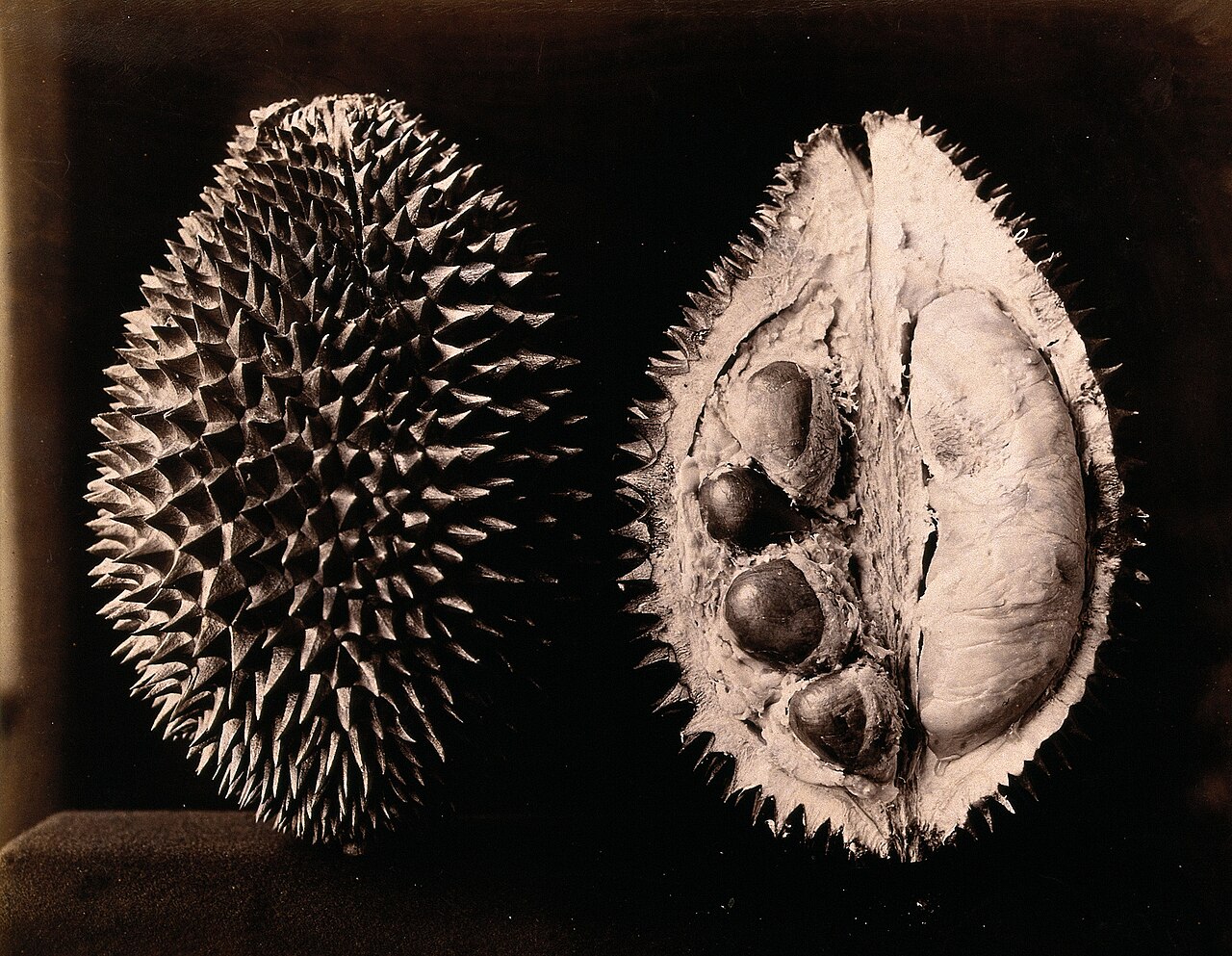
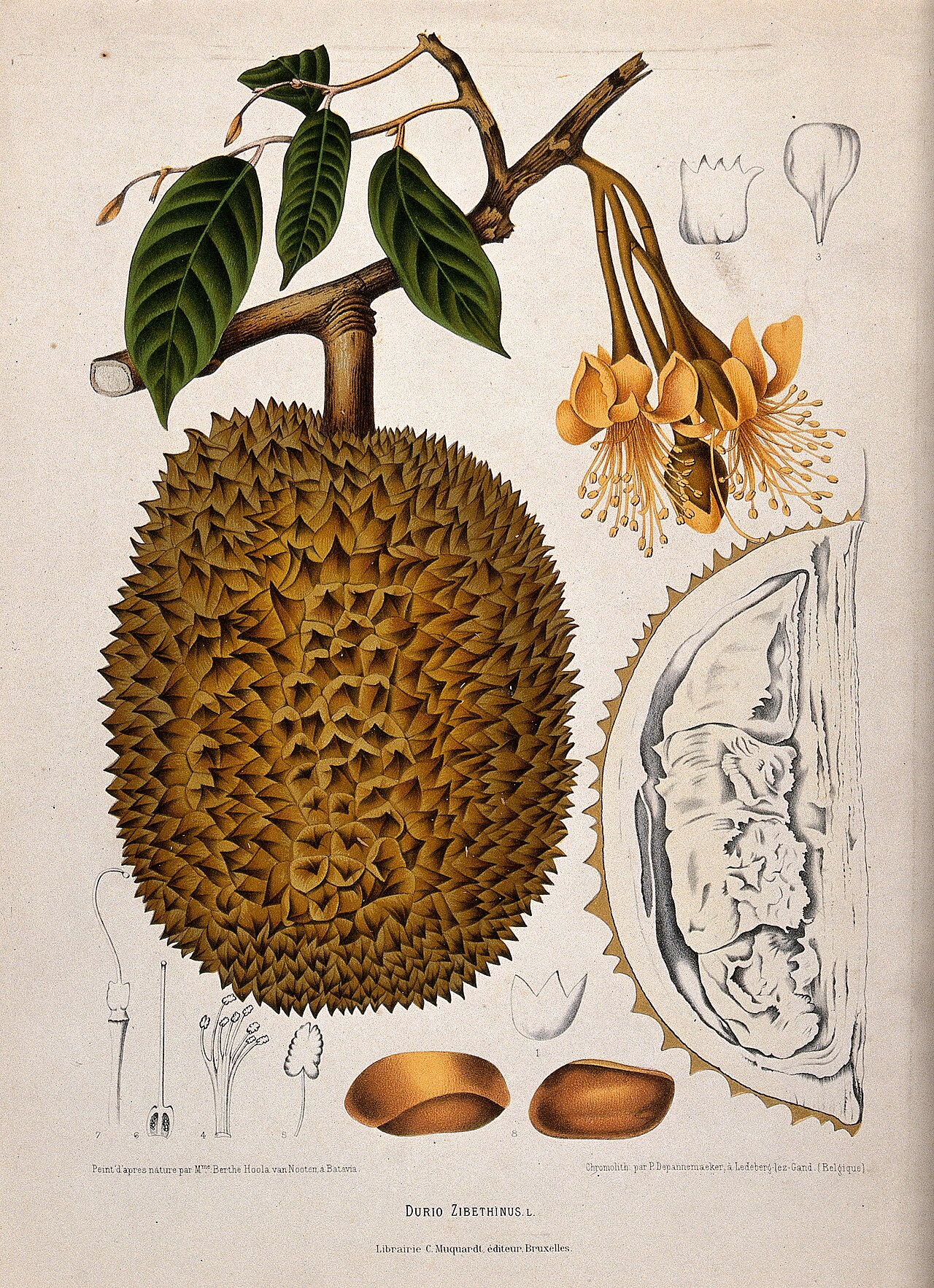
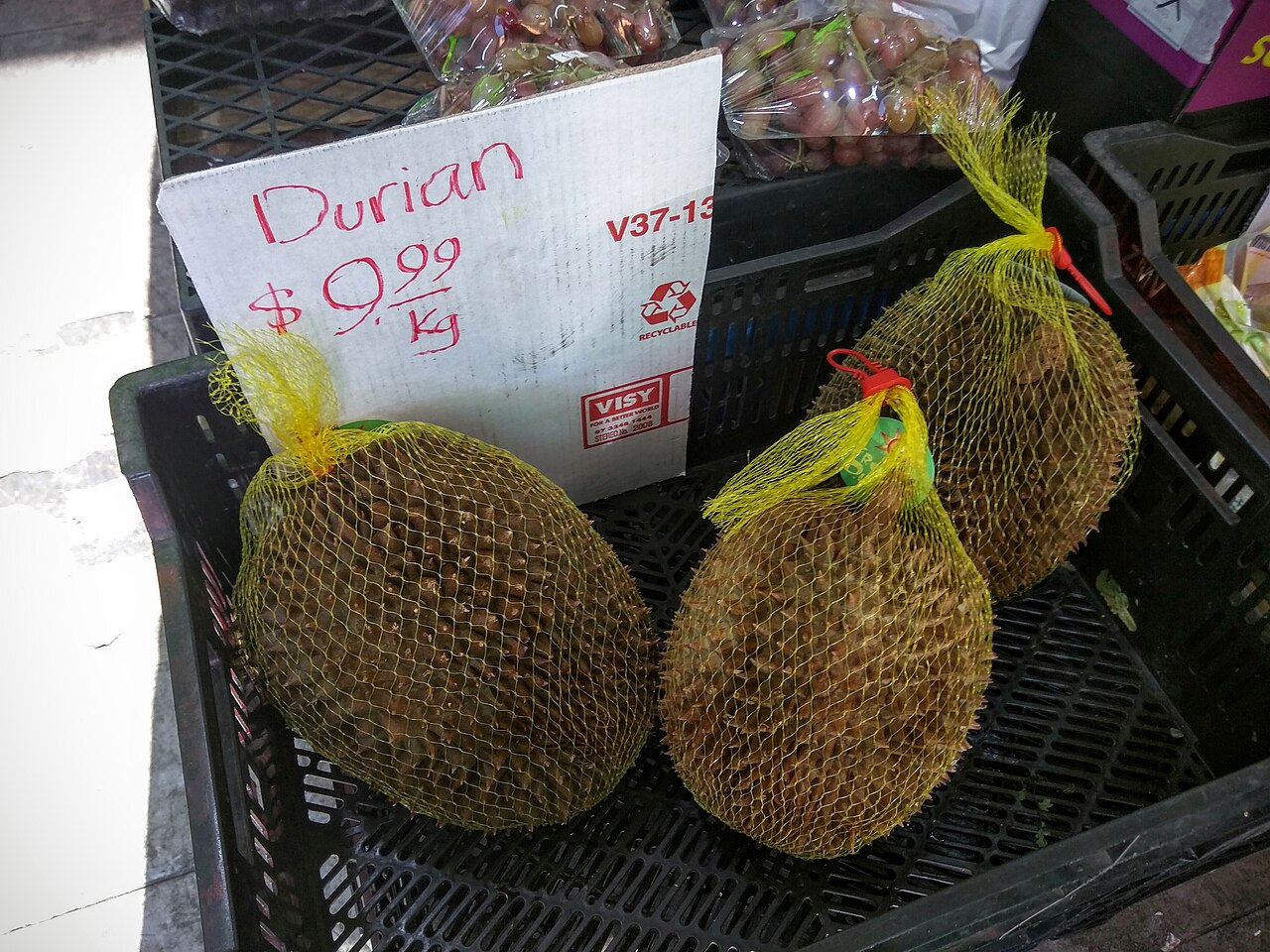
The durian is a fruit from trees in the genus *Durio*, with 30 known species, at least nine of which bear edible fruit. Only one species, *Durio zibethinus*, is traded globally; it originates from Borneo, Sumatra, and the Malay Peninsula. By 2021, Thailand had over 300 named varieties of this species, and Malaysia had over 200. Other edible species are sold only locally. Often called the "king of fruits," the durian is notable for its large size, powerful smell, and spiky rind. The fruit can reach 30 cm (12 in) long and 15 cm (6 in) wide, typically weighing 1 to 3 kg (2 to 7 lb). Its shape varies from oblong to round, its husk from green to brown, and its flesh from pale yellow to red, depending on the species. The flesh has a complex, savory flavor and a creamy, pudding-like texture. Some people find the aroma pleasantly sweet, while others find it overwhelming and unpleasant. The smell can linger for days, leading some hotels and public transport in Southeast Asia—such as in Singapore and Bangkok—to ban the fruit. The flesh is eaten at different stages of ripeness and flavors many sweet desserts and savory dishes in the region. The seeds are edible when cooked. The name "durian" comes from the Malay word *duri* (thorn) plus the suffix *-an*. The Oxford English Dictionary first records the word in a 1588 translation of Juan González de Mendoza’s *Historie of the Great and Mightie Kingdome of China*. Historical variant spellings include durion, duryoen, duroyen, durean, and dorian. The species name *zibethinus* derives from Italian *zibetto* (civet), because the fruit’s strong odor reminded people of that animal. Durian trees are large, reaching 25 to 50 metres (80–165 ft) tall. Their evergreen leaves are elliptic to oblong, 10–18 cm (4–7 in) long. Flowers grow in clusters of three to thirty on large branches and directly on the trunk; each flower has a calyx and five (rarely four or six) petals. Trees typically have one or two flowering and fruiting periods per year, depending on species, cultivar, and location. A tree usually bears fruit after four or five years. The fruit hangs from any branch and matures about three months after pollination. Among the 30 known *Durio* species, eight produce edible fruit: *D. zibethinus*, *D. dulcis*, *D. graveolens*, *D. kutejensis*, *D. lowianus*, *D. macrantha*, *D. oxleyanus*, and *D. testudinarius*. *D. zibethinus* i
- genus
- Durio
- number_of_species
- 30 recognised species, at least nine produce edible fruit
- international_species
- Durio zibethinus
- native_region
- Borneo, Sumatra, and the Malay Peninsula
- known_for
- Strong odour, thorn-covered rind, creamy flesh
- cultivar_count_Thailand_2021
- over 300 named varieties
- cultivar_count_Malaysia_2021
- over 200 named varieties
Lore & Background
The name durian is derived from the Malay word duri 'thorn', combined with the noun-building suffix -an. The Oxford English Dictionary first cites the word from a 1588 translation of Juan González de Mendoza's Historie of the Great and Mightie Kingdome of China. The name of the type species, Durio zibethinus, is derived from the Italian zibetto 'civet', as the strong pungent odour of the fruit reminded people of the smell of the animal.
Durian trees are large, growing to 25–50 metres in height depending on the species. The leaves are evergreen, elliptic to oblong and 10–18 centimetres long. The flowers are produced in three to thirty clusters together on large branches and directly on the trunk. Durian trees have one or two flowering and fruiting periods per year. A typical durian tree can bear fruit after four or five years. The fruit can grow up to 30 cm long and 15 cm in diameter, and typically weighs 1 to 3 kilograms.
The earliest known European reference to the durian is the record of Niccolò de' Conti, who travelled to Southeast Asia in the 15th century. The Portuguese physician Garcia de Orta described durians in Colóquios dos simples e drogas da India published in 1563. In 1741, Herbarium Amboinense by the German botanist Georg Eberhard Rumphius was published, providing the most detailed and accurate account of durians for over a century.
Reader's Guide
The durian holds a significant place in Southeast Asian culture and commerce. It is the only species of the genus Durio available on the international market, with over 300 named varieties in Thailand and over 200 in Malaysia as of 2021. The fruit's strong odour, which some find pleasantly sweet and others overpowering, has led to bans in some hotels and public transportation services in Southeast Asia, such as in Singapore and Bangkok. The flesh can be consumed at various stages of ripeness and is used to flavour a wide variety of sweet desserts and savoury dishes in Southeast Asian cuisines. The seeds can be eaten when cooked. Since the early 1990s, domestic and international demand for durian in the ASEAN region has increased significantly, and in the early 2020s, a durian craze in China led to a large increase in international trade of the fruit. The durian has been cultivated for centuries at the village level, probably since the late 18th century, and commercially since the mid-20th century.
Did You Know?
- The name durian is derived from the Malay word duri 'thorn', referring to the prickly thorns on the fruit's rind.
- Durio zibethinus is the only species available on the international market.
- The fruit can grow as large as 30 cm long and 15 cm in diameter, and typically weighs 1 to 3 kg.
- Some hotels and public transportation services in Singapore and Bangkok have banned the fruit due to its persistent strong odour.
Physical Form & Sensory Profile
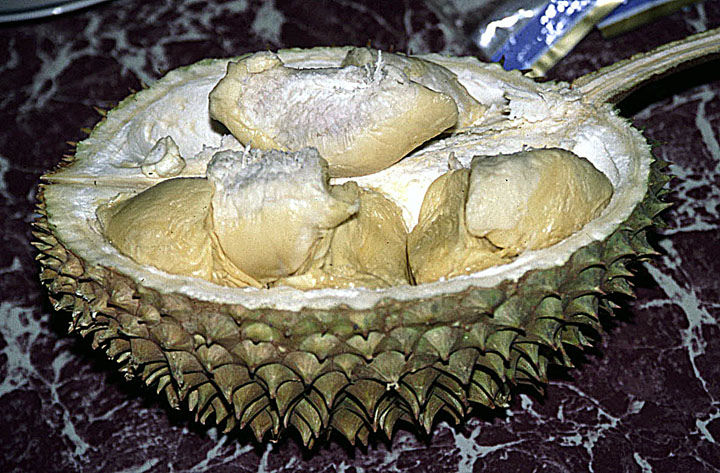
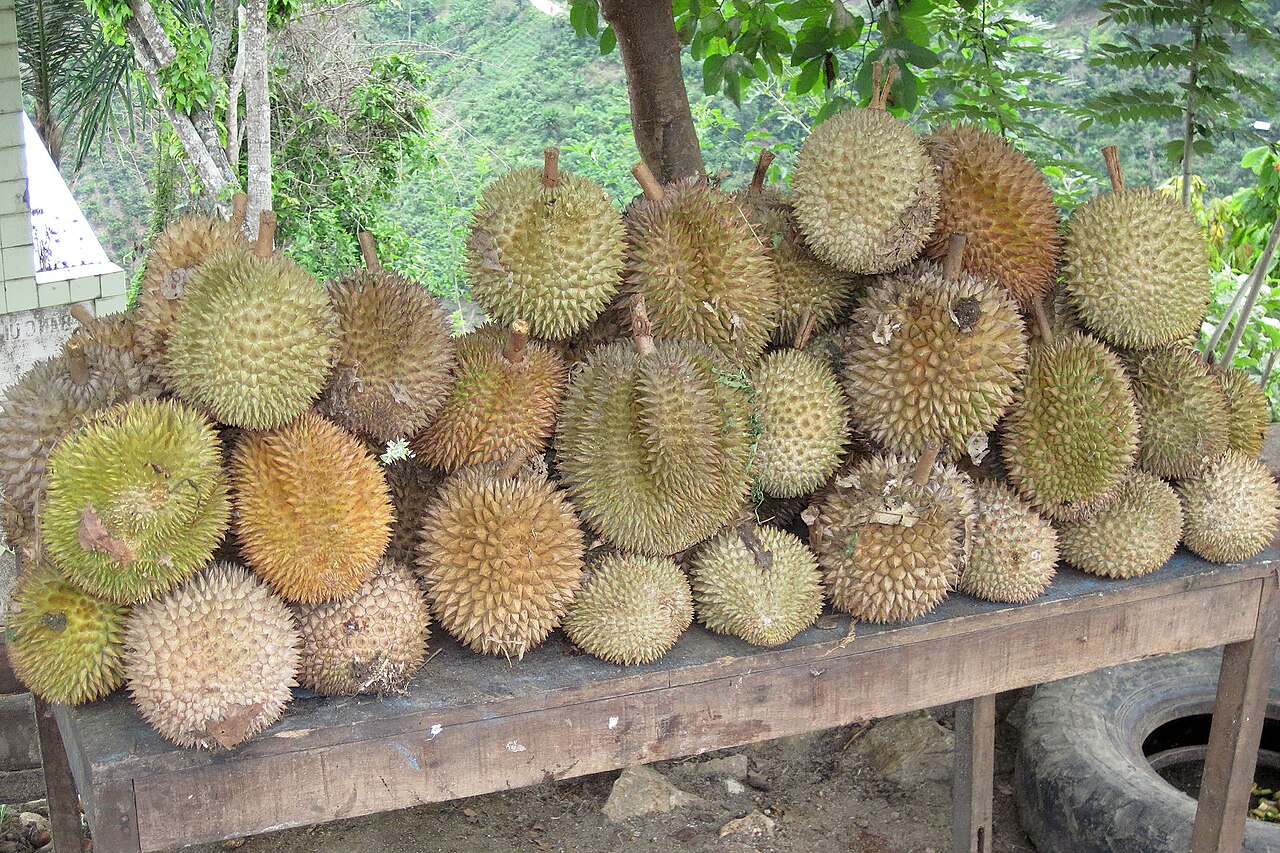
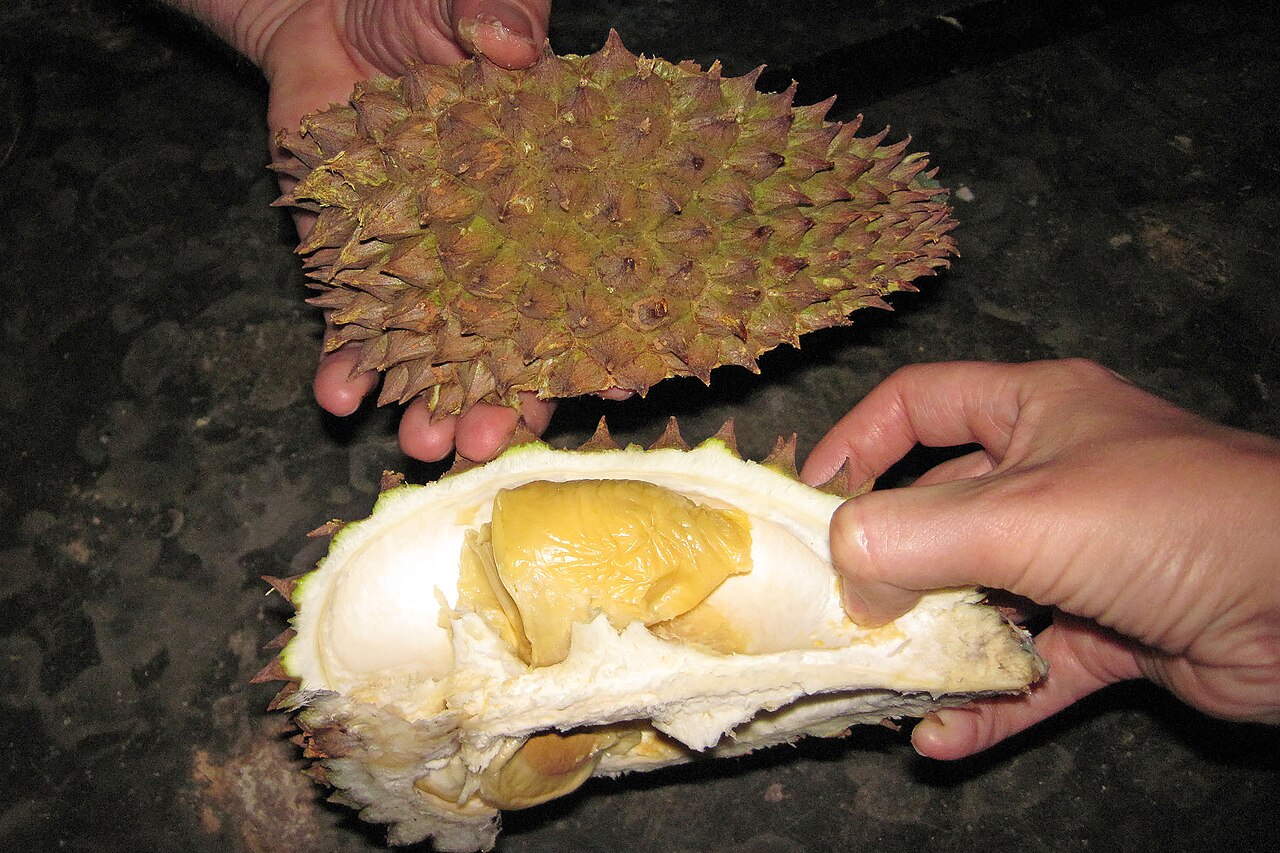
The durian is immediately striking in its physical presence. The fruit can reach 30 cm in length and 15 cm in diameter, typically weighing between one and three kilograms. Its shape is not uniform — it can be oblong or round — while the husk shifts across a spectrum from green to brown, and the flesh inside ranges from pale yellow to red depending on the species. The rind is densely covered in prickly thorns, a feature so defining that it gave the fruit its name from the Malay word duri, meaning thorn. Inside, the flesh offers a creamy, pudding-like texture with a complex flavour that carries savoury undertones alongside sweetness. The most polarising aspect, however, is the odour. Some people find the fragrance pleasantly sweet, while many others describe it as overpowering and unpleasant. The smell is so persistent that it can linger for several days, a quality that has prompted hotels and public transit systems in cities like Singapore and Bangkok to prohibit the fruit entirely. The type species name, zibethinus, itself references the Indian civet, as the pungent aroma reminded early observers of that animal's scent.
Botany, Pollination & Species Diversity
Durian trees are substantial, reaching heights of 25 to 50 metres depending on the species. Their evergreen leaves are elliptic to oblong, measuring 10 to 18 centimetres in length. Flowers appear in clusters of three to thirty directly on large branches or the trunk, each bearing a calyx and typically five petals. These flowers are notably large and feathery, producing copious nectar and releasing a heavy, sour, buttery odour — traits characteristic of flowers adapted to vertebrate pollinators. In fact, several bat species, including the cave nectar bat, the lesser short-nosed fruit bat, and the large flying fox, serve as pollinators. Two other species rely on spiderhunter birds, while one is pollinated by giant honey bees and birds in addition to bats. Scientists have hypothesised that the evolution of larger flowers and monothecate anthers in the Durio clade coincided with a shift from beetle pollination to vertebrate pollination. A typical tree begins bearing fruit after four or five years, with the fruit maturing roughly three months after pollination. The genus encompasses 30 recognised species, at least nine of which yield edible fruit, though only Durio zibethinus is commercially cultivated on a large scale and traded internationally.
Origins, Early Encounters & Taxonomic History
The durian's roots are believed to lie in Borneo and Sumatra, with wild trees across the Malay Peninsula and cultivated orchards stretching from India to New Guinea. Four centuries ago, the fruit was already being traded across what is now Myanmar and actively grown in Thailand and South Vietnam. The earliest known European account comes from Niccolò de' Conti, a 15th-century traveller to Southeast Asia, who described a green fruit the size of a watermelon containing five elongated segments resembling thick butter. The Portuguese physician Garcia de Orta followed with a description in 1563, and the German botanist Georg Eberhard Rumphius published the most detailed and accurate account in his 1741 Herbarium Amboinense, a work that stood as the definitive reference for over a century. The genus Durio, established by Rumphius, has since undergone considerable taxonomic revision, with species added and removed over time. Early confusion arose between the durian and the soursop, both bearing thorny green fruit; the Malay name for soursop, durian Belanda, literally means Dutch durian. In the 18th century, Johann Anton Weinmann even classified the durian with Castaneae, drawing a parallel to the horse chestnut.
Culinary Role & Cultural Presence
In Southeast Asian kitchens, the durian transcends its role as a simple fruit. Its flesh, enjoyable at various stages of ripeness, flavours a wide array of sweet desserts and savoury dishes across the region. The seeds, when cooked, are also edible, adding another dimension to its culinary versatility. In Thailand alone, more than 300 named varieties exist, and Malaysia counts over 200 as of 2021, reflecting the depth of local cultivation and appreciation. The fruit's reputation as the king of fruits in several regions captures its cultural prominence. Yet this status carries practical consequences. The odour, which can persist for days, has led to outright bans in certain public spaces. Hotels and public transportation services in cities such as Singapore and Bangkok have prohibited the durian, recognising that its aromatic intensity can overwhelm enclosed environments. Despite these restrictions, the fruit remains a cornerstone of regional food culture, its complex, savoury-sweet flavour and creamy texture making it indispensable to both everyday cooking and celebratory dishes. The Portuguese introduced Durio zibethinus to Ceylon in the 16th century, and seedlings were later sent to botanical gardens in the Americas, though cultivation there has remained confined to those institutional settings.
Gallery
Frequently Asked Questions
What is Durian?
Durian is the edible fruit borne by trees in the genus Durio, a group of 30 recognised species of which at least nine produce fruit people can eat. It is instantly recognisable by its thick, thorn-covered rind and the intensely aromatic, creamy flesh packed inside.
Which Durian species is sold on the international market?
Only Durio zibethinus is traded globally; every other edible species is restricted to local markets near where it grows. Its popularity is enormous—Thailand alone has catalogued over 300 named varieties and Malaysia more than 200 as of 2021.
Where is Durian originally from?
The globally traded species, Durio zibethinus, is native to the tropical lowlands of Borneo, Sumatra, and the Malay Peninsula. The other edible Durio species are scattered across Southeast Asian forests but rarely travel beyond their home regions.
How big and heavy can a single Durian fruit get?
A mature durian can reach roughly 30 cm in length and 15 cm in width, typically weighing between 1 and 3 kg. That considerable mass is wrapped in a hard, spiky rind that shields the soft, custard-like flesh segments within.
Why is Durian called the 'king of fruits'?
The regal nickname reflects its outsized presence in Southeast Asian cuisine, its rich and complex flavour, and the famously overpowering odour that sets it apart from virtually every other fruit. Few other fruits command the same mix of reverence, controversy, and cultural pride.
More in Fruit Trees & Berries 1-18
Spotted an error? Know more?
This is a living reference — every entry is fact-audited, and reader corrections feed straight into our audit queue. Suggest an edit · See this site's audit record