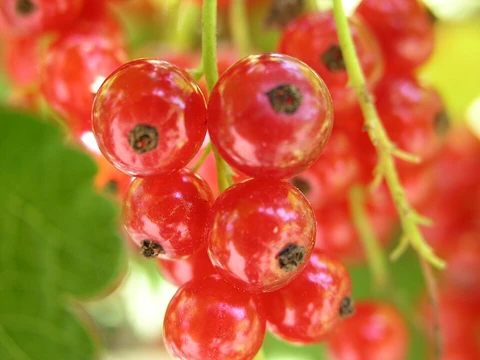
Cherry
A fleshy drupe from the genus Prunus, cultivated for millennia.
Cherries are the fleshy stone fruits produced by various plants in the genus *Prunus*. The sweet *Prunus avium* and the sour *Prunus cerasus* are the main species behind commercially grown cherry cultivars. The same word—cherry—applies to the tree, its blossoms, and its wood, which is why you hear terms like "ornamental cherry" or "cherry blossom." Any cherry species that grows without cultivation can be called a wild cherry, though in the British Isles the name "wild cherry" usually refers specifically to *Prunus avium*.
- botanical_group
- Genus Prunus
- subgenera
- Cerasus (true cherries), Prunus (bush cherries), Padus (racemose cherries)
- key_species
- Prunus avium (sweet), Prunus cerasus (sour)
- native_range
- Europe, western Asia, parts of northern Africa
- first_recorded_cultivation
- Brought to Rome from northeastern Anatolia in 72 BCE
- introduced_to_England
- By order of Henry VIII at Teynham, Kent
Lore & Background
The indigenous range of the sweet cherry extends through most of Europe, western Asia, and parts of northern Africa, and the fruit has been consumed throughout its range since prehistoric times. A cultivated cherry is recorded as having been brought to Rome by Lucius Licinius Lucullus from northeastern Anatolia, also known as the Pontus region, in 72 BCE. Cherries were introduced into England at Teynham, near Sittingbourne in Kent, by order of Henry VIII, who had tasted them in Flanders. Cherries, along with many other fruiting trees and plants, probably first arrived in North America around 1606 in the New France colony of Port Royal, which is modern-day Annapolis Royal, Nova Scotia.
Reader's Guide
Cherries are significant as one of the earliest tree fruits to flower and ripen in temperate regions, with a short growing season that peaks in summer in the Northern Hemisphere and around Christmas in the Southern Hemisphere. The most common cultivated species are sweet cherry (Prunus avium) and sour cherry (Prunus cerasus), both originating in Europe and western Asia. Cultivation requires careful management due to pests such as the black cherry aphid and cherry fruit fly, as well as susceptibility to bacterial infections. Cherries are relatively expensive due to irrigation, spraying, labor, and vulnerability to rain and hail damage. The fruit has been consumed since prehistoric times and was spread through Roman and later European expansion. The word 'cherry' derives from Old Northern French or Norman cherise from the Latin cerasum, referring to the ancient Greek region of Kerasous near Giresun, Turkey. The term is also used for some species outside the Prunus genus that bear similar fruits, such as 'Jamaican cherry' (Muntingia calabura) and 'Spanish cherry' (Mimusops elengi).
Did You Know?
- The English word 'cherry' derives from Old Northern French or Norman cherise from the Latin cerasum, referring to the ancient Greek region Kerasous near Giresun, Turkey.
- A cultivated cherry was brought to Rome by Lucius Licinius Lucullus from northeastern Anatolia in 72 BCE.
- Cherries were introduced into England at Teynham, Kent, by order of Henry VIII after he tasted them in Flanders.
- The term 'cherry' is also used for some species not in the Prunus genus, such as 'Jamaican cherry' (Muntingia calabura) and 'Spanish cherry' (Mimusops elengi).
Frequently Asked Questions
What is Cherry in botanical terms?
Cherry is a fleshy drupe (stone fruit) produced by plants in the genus Prunus. The two commercially dominant species are the sweet Prunus avium and the sour Prunus cerasus, which together give rise to most cultivated cherry varieties.
What subgroups exist within the Cherry genus?
The genus Prunus splits into three cherry-relevant subgenera: Cerasus (true cherries), Prunus (bush cherries), and Padus (racemose cherries). Each subgroup yields a distinct fruit shape and growth habit.
Where is Cherry native to, and when was it first cultivated?
Cherry species are native across Europe, western Asia, and parts of northern Africa. The earliest recorded cultivation dates to 72 BCE, when fruit was brought from northeastern Anatolia into Rome.
How did Cherry make its way to England?
Cherry was introduced to English soil by royal decree of Henry VIII, who ordered its planting at Teynham in Kent. That single act launched its long horticultural history in the British Isles.
What does the word 'cherry' cover beyond the fruit itself?
The term applies to the tree, its spring blossoms, and even its hardwood, which is why you encounter phrases like 'ornamental cherry' or 'cherry blossom.' In the British Isles, 'wild cherry' specifically denotes the uncultivated Prunus avium.
More in Fruit Trees & Berries 1-18
Spotted an error? Know more?
This is a living reference — every entry is fact-audited, and reader corrections feed straight into our audit queue. Suggest an edit · See this site's audit record