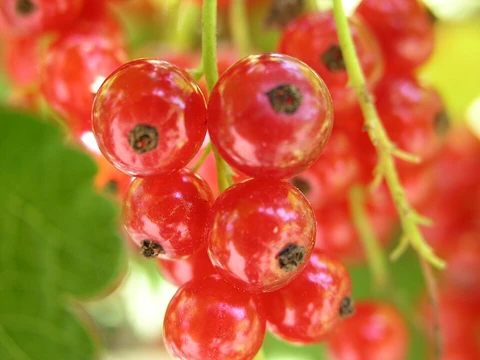
Blueberry
Perennial flowering plants with blue berries, native to North America.
Blueberries are a widely distributed group of perennial flowering plants in the section Cyanococcus of the genus Vaccinium, producing blue or purple berries. Commercial blueberries, both wild (lowbush) and cultivated (highbush), are native to North America, with highbush varieties introduced to Europe in the 1930s. They are significant as a cultivated crop and wild-harvested fruit, with Canada leading lowbush production and the United States producing 29% of the world's highbush supply in 2024.
- classification
- Section Cyanococcus, genus Vaccinium
- native_region
- North America
- height_range
- 10 cm to 4 meters
- fruit_size
- 5–16 mm diameter
- soil_preference
- Acidic, pH 4.2–5.2
- leading_lowbush_producer_2024
- Canada
- leading_highbush_producer_2024
- United States (29% of world supply)
Lore & Background
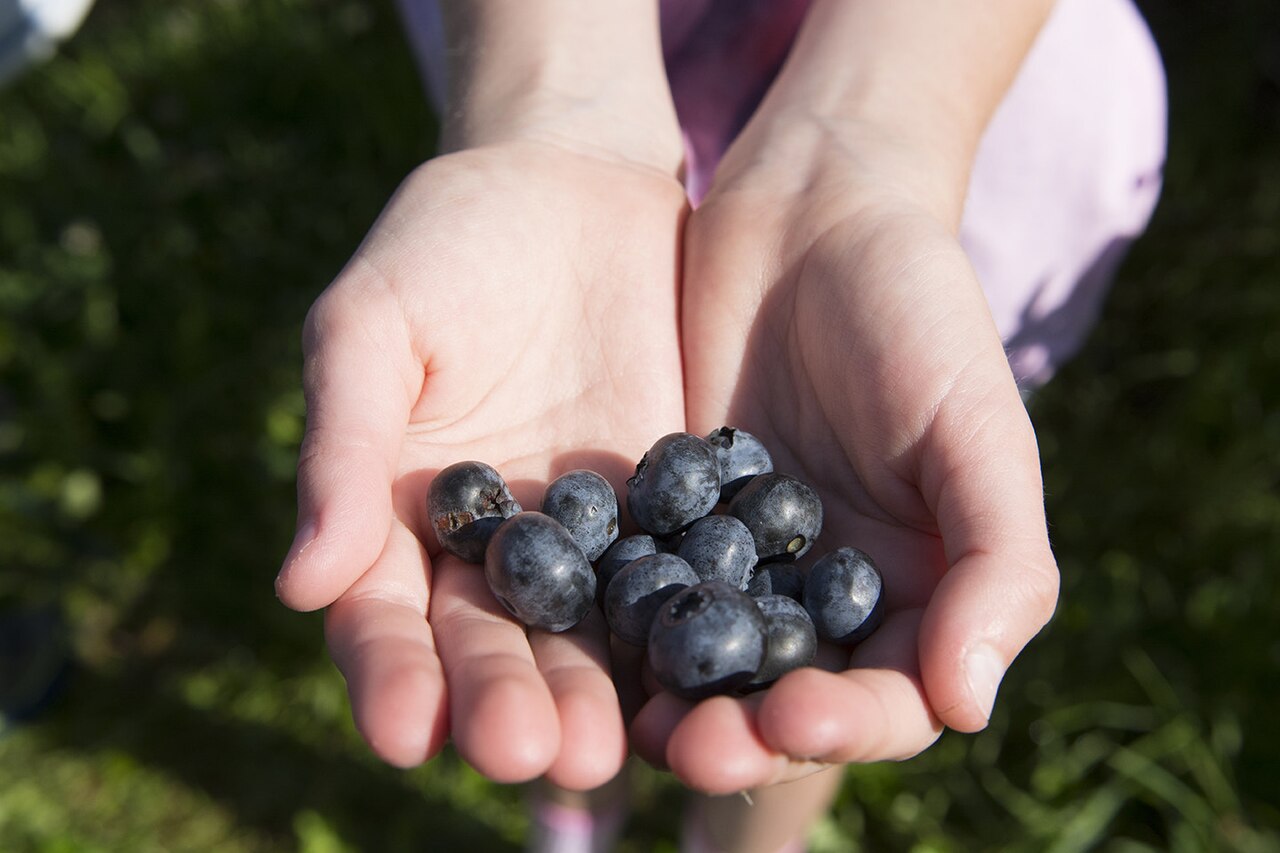
Blueberries are usually prostrate shrubs varying from 10 centimeters to 4 meters in height. Lowbush (wild) blueberries have small, pea-size berries on low bushes, while highbush (cultivated) varieties produce larger berries on taller bushes. Wild blueberries reproduce by cross-pollination, with each seed yielding a genetically distinct plant; the mother plant forms underground stems called rhizomes, creating large genetically distinct patches called clones. They prefer acidic soil between 4.2 and 5.2 pH and moderate moisture, with hardy cold tolerance in Canada and the northern United States.
Reader's Guide
Blueberries hold significance as a commercially important fruit crop, with distinct lowbush and highbush types managed differently. Lowbush blueberries are often managed on barrens rather than planted, while highbush varieties were first cultivated in New Jersey around the early 20th century. The USDA-ARS breeding program, initiated by Frederick Vernon Coville in collaboration with Elizabeth Coleman White, discovered the importance of soil acidity and that blueberries do not self-pollinate. Their work doubled fruit size in some strains by 1916, making blueberries a valuable crop in the northeastern United States. Today, blueberries are grown commercially in North America, the Southern Hemisphere, and wild-harvested in regions like the Andes. The distinction between wild and cultivated blueberries persists in marketing and production, with Canada leading lowbush production and the United States a major highbush producer.
Did You Know?
- Wild blueberries reproduce by cross-pollination, with each seed producing a genetically distinct plant.
- The mother plant develops underground stems called rhizomes, forming large genetically distinct patches called clones.
- Blueberries are covered in a protective coating of powdery epicuticular wax known as the 'bloom'.
- Lowbush blueberries are generally not planted by farmers but managed on berry fields called 'barrens'.
Botanical Identity & Physical Form
Blueberries belong to the section Cyanococcus within the genus Vaccinium, a group of perennial flowering shrubs that produce small blue or purple fruits. Their physical form is remarkably diverse: individual plants can range from a mere ten centimeters to as much as four meters in height, typically growing in a low, spreading habit. The foliage varies between deciduous and evergreen types, with leaves shaped from oval to lance-shaped, measuring roughly one to eight centimeters in length. Flowers appear in clusters of five or six per bud, taking on bell-like forms in shades of white, pale pink, or red, occasionally with a greenish tinge. The fruit itself is a small berry between five and sixteen millimeters across, crowned with a distinctive flared calyx at its tip. As berries ripen, they transition from pale green through reddish-purple to a uniform deep blue, all while wearing a natural dusting of powdery wax that foragers and growers colloquially call the 'bloom.' When fully mature, the fruit offers a sweet flavor balanced by a degree of acidity that shifts from one plant to the next.
Wild and Cultivated: Two Distinct Lineages
The blueberry world divides neatly into two commercial categories that differ in nearly every respect. Lowbush blueberries, often simply called 'wild,' produce tiny pea-sized fruits on bushes that hug the ground, while highbush varieties yield noticeably larger berries from taller, deliberately cultivated plants. The growing methods reflect this divide. Lowbush berries are rarely planted in the conventional sense; instead, they are managed across open fields known as barrens, using techniques that echo pre-Columbian slash-and-burn practices still in use today. These wild plants thrive in acidic soils with a pH between 4.2 and 5.2, require only moderate moisture, and possess a hardy cold tolerance suited to Canada and the northern United States. They reproduce through cross-pollination, meaning every seedling carries a unique genetic makeup. Underground rhizomes spread to form vast genetically uniform patches called clones. By contrast, highbush blueberries favor sandy or loam soils, rely on shallow root systems supported by mulch and fertilizer, and their wild counterparts average a mature fruit weight of just 0.3 grams.
Global Footprint & Commercial Production
Although every commercially important blueberry species traces its origins to North America, the fruit's reach now spans multiple continents. The highbush varieties crossed the Atlantic in the 1930s, establishing a foothold in European cultivation. Today, the genus Vaccinium enjoys a broadly circumpolar presence, with species found across North America, Europe, and Asia. In 2024, Canada held the top position for lowbush blueberry production, while the United States accounted for roughly twenty-nine percent of the global highbush supply. The fruit has also taken root in the Southern Hemisphere, where North American native species are now grown commercially in Australia, New Zealand, and several South American countries. In the Andes, the wild-harvested Vaccinium meridionale, known as the Andean blueberry, remains a locally available staple. Confusion with look-alike berries persists worldwide: huckleberries and whortleberries in North America, and bilberries in Europe, are all closely related Vaccinium species that many languages simply translate as 'blueberry,' as seen in Scots blaeberry, Norwegian blåbær, and French myrtilles.
Cultivation History & Seasonal Rhythms
The story of blueberry cultivation in its modern form is relatively brief. Highbush blueberries were first deliberately grown in New Jersey around the turn of the twentieth century, a milestone that launched the industry. The northern highbush, Vaccinium corymbosum, remains the most widely cultivated species in North America, while crossbreeds adapted to warmer southern U.S. climates are collectively marketed as southern highbush blueberries. In the wild, lowbush productivity is shaped by a complex interplay of factors: the degree of pollination, the particular genetics of each clone, soil fertility, water availability, insect pressure, disease, and local growing conditions all leave their mark on the harvest. In the northern hemisphere, blueberry bushes typically bear fruit in the middle of the growing season, with harvest windows stretching from May through August depending on climate, altitude, and latitude. This seasonal variability means that a forager in the Canadian Maritimes and a grower in British Columbia will experience very different picking calendars, even when working with the same species.
Gallery



Frequently Asked Questions
Who is Blueberry?
Blueberry is a perennial flowering shrub belonging to the Cyanococcus section of the Vaccinium genus, recognized for its small blue-to-purple fruits. It appears in both wild lowbush and cultivated highbush forms, with individual plants spanning from roughly 10 cm up to 4 meters in height.
What are Blueberry's key traits or 'powers'?
Blueberry demands acidic growing conditions, thriving only in soil with a pH between 4.2 and 5.2, and its berries measure about 5 to 16 mm across. As a true perennial, it regenerates and fruits year after year rather than finishing its life in a single season.
Where does Blueberry originate from?
Both the wild lowbush and cultivated highbush types are native to North America, where they have long been foraged and cultivated. Highbush varieties were subsequently brought into European cultivation during the 1930s.
How does Blueberry's story end?
Because Blueberry is a perennial, it has no single final act—it simply keeps bearing fruit season after season while conditions remain favorable. Its ongoing narrative is that of a dual-purpose crop, valued equally as a wild-harvested forage and a commercial orchard product.
Why is Blueberry important in the wider world?
Blueberry ranks as a major global fruit, with Canada heading the world in lowbush output and the United States supplying 29% of the planet's highbush production as of 2024. Its nutritional profile and economic role make it one of the most widely cultivated berry species on Earth.
More in Fruit Trees & Berries 1-18
Spotted an error? Know more?
This is a living reference — every entry is fact-audited, and reader corrections feed straight into our audit queue. Suggest an edit · See this site's audit record