Brazil nut
A large Amazonian tree producing edible seeds rich in selenium.
The Brazil nut (Bertholletia excelsa) is a South American tree of the monotypic genus Bertholletia in the family Lecythidaceae, as well as the tree's commercially harvested edible seeds. It is one of the largest and longest-lived trees in the Amazon rainforest, reaching 50 meters tall and living up to a thousand years. The fruit and its nutshell are relatively large, weighing up to 2 kg, and the seeds are notable for their high selenium content.
- Scientific name
- Bertholletia excelsa
- Family
- Lecythidaceae
- Native range
- Guianas, Venezuela, Brazil, eastern Colombia, eastern Peru, eastern Bolivia
- Height
- Up to 50 meters
- Lifespan
- 500 years or more, often up to 1,000 years
- 2024 world production
- 79,736 tonnes
- Top producers
- Brazil and Bolivia (87% of total)
Lore & Background
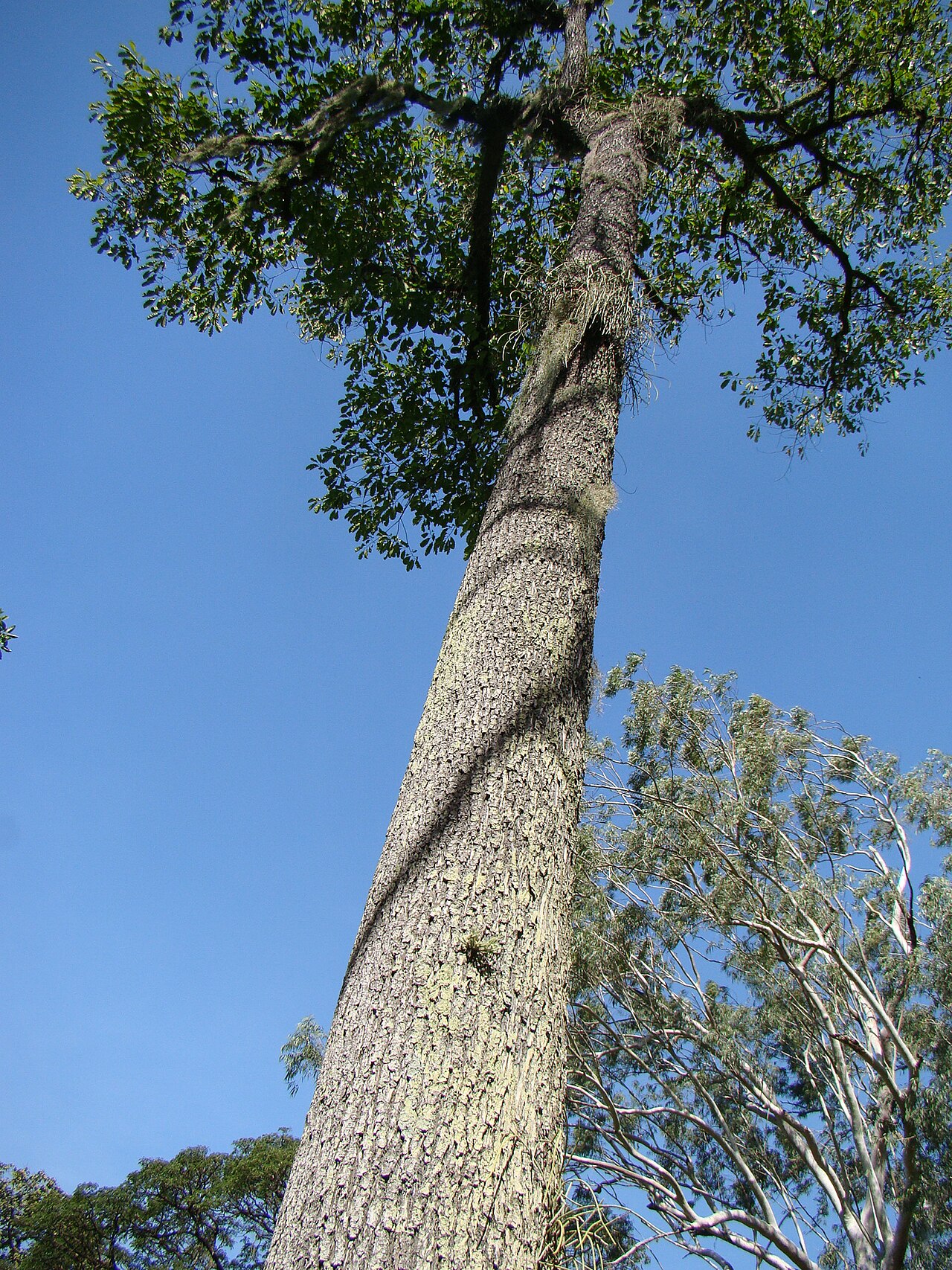
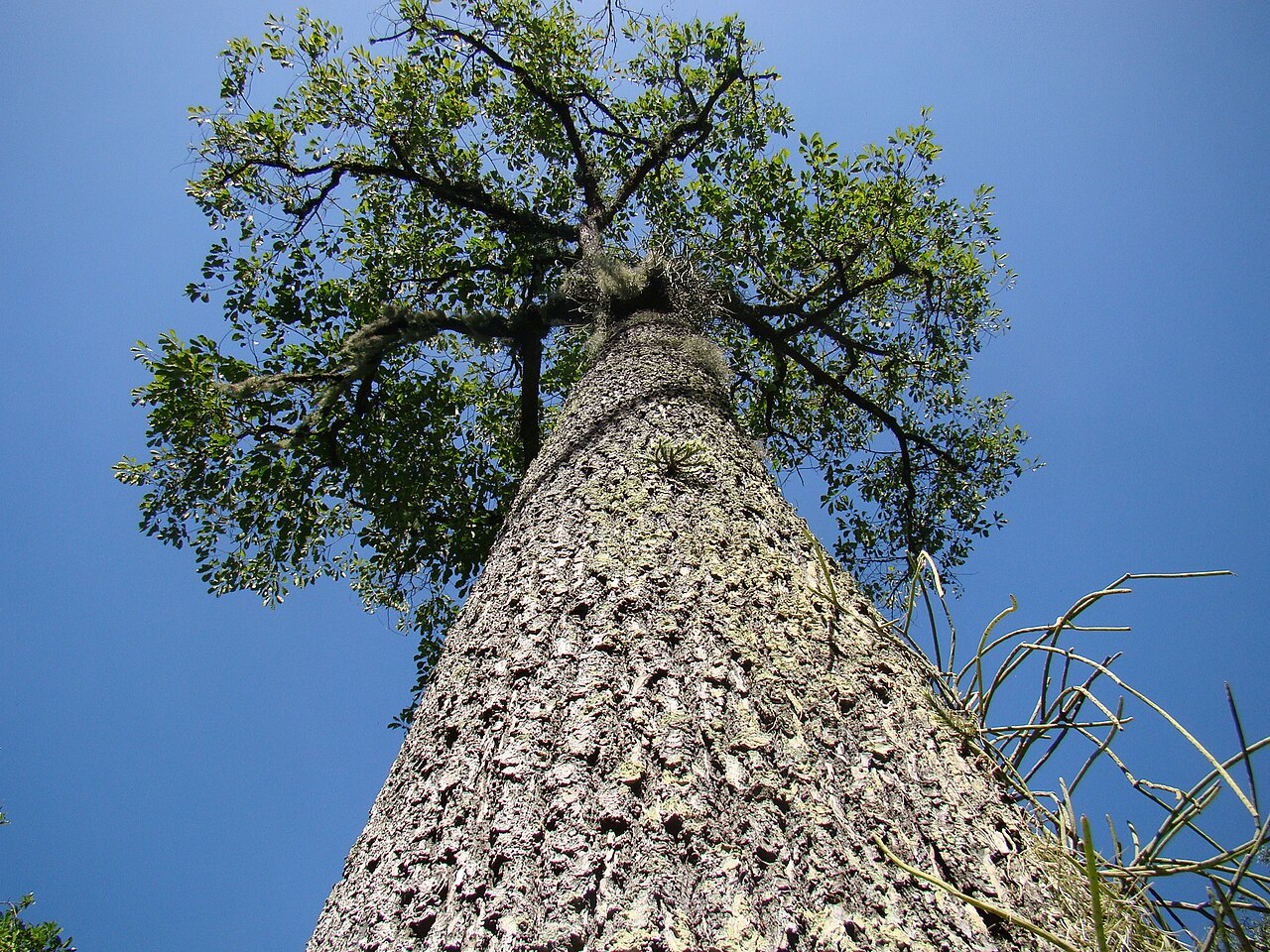
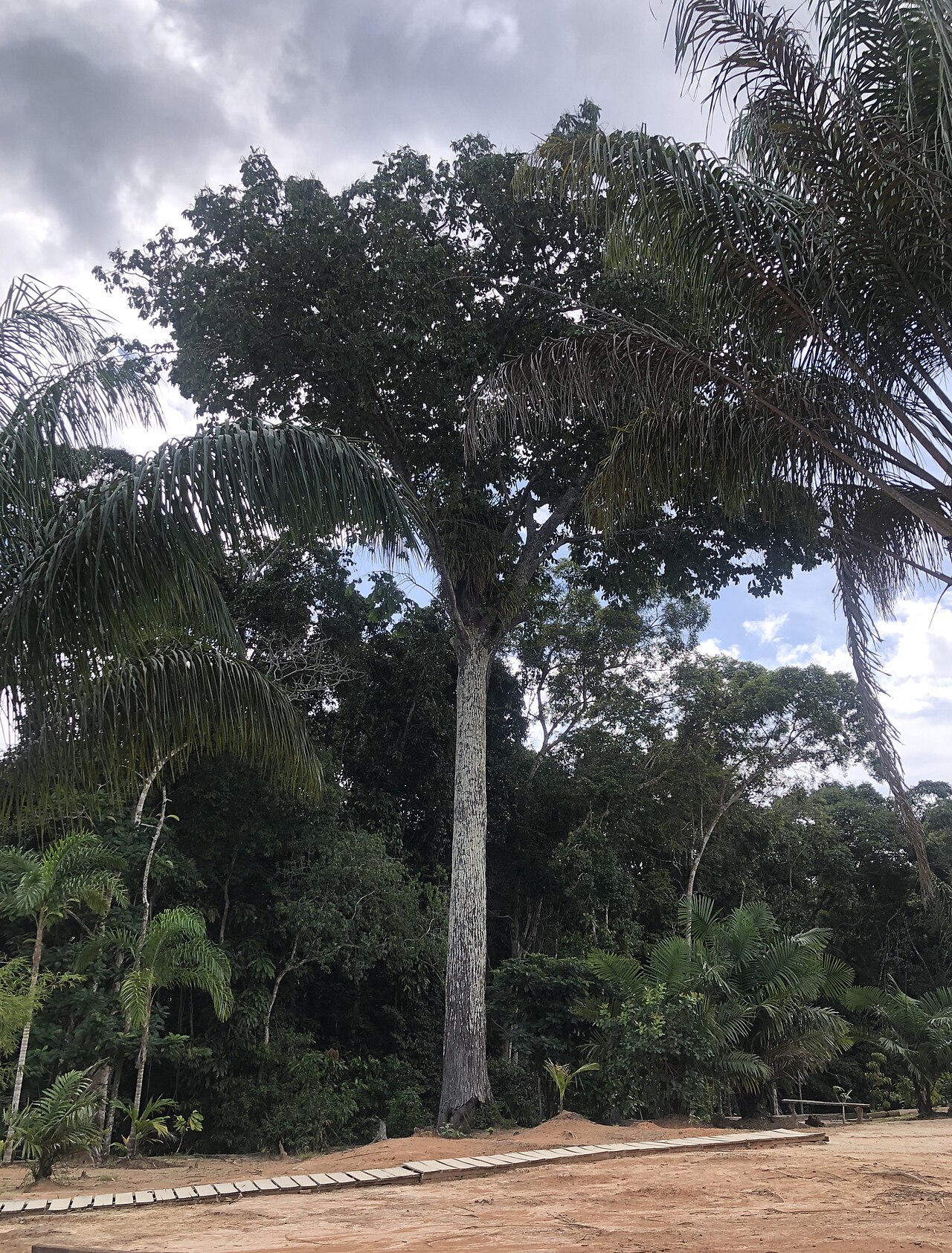
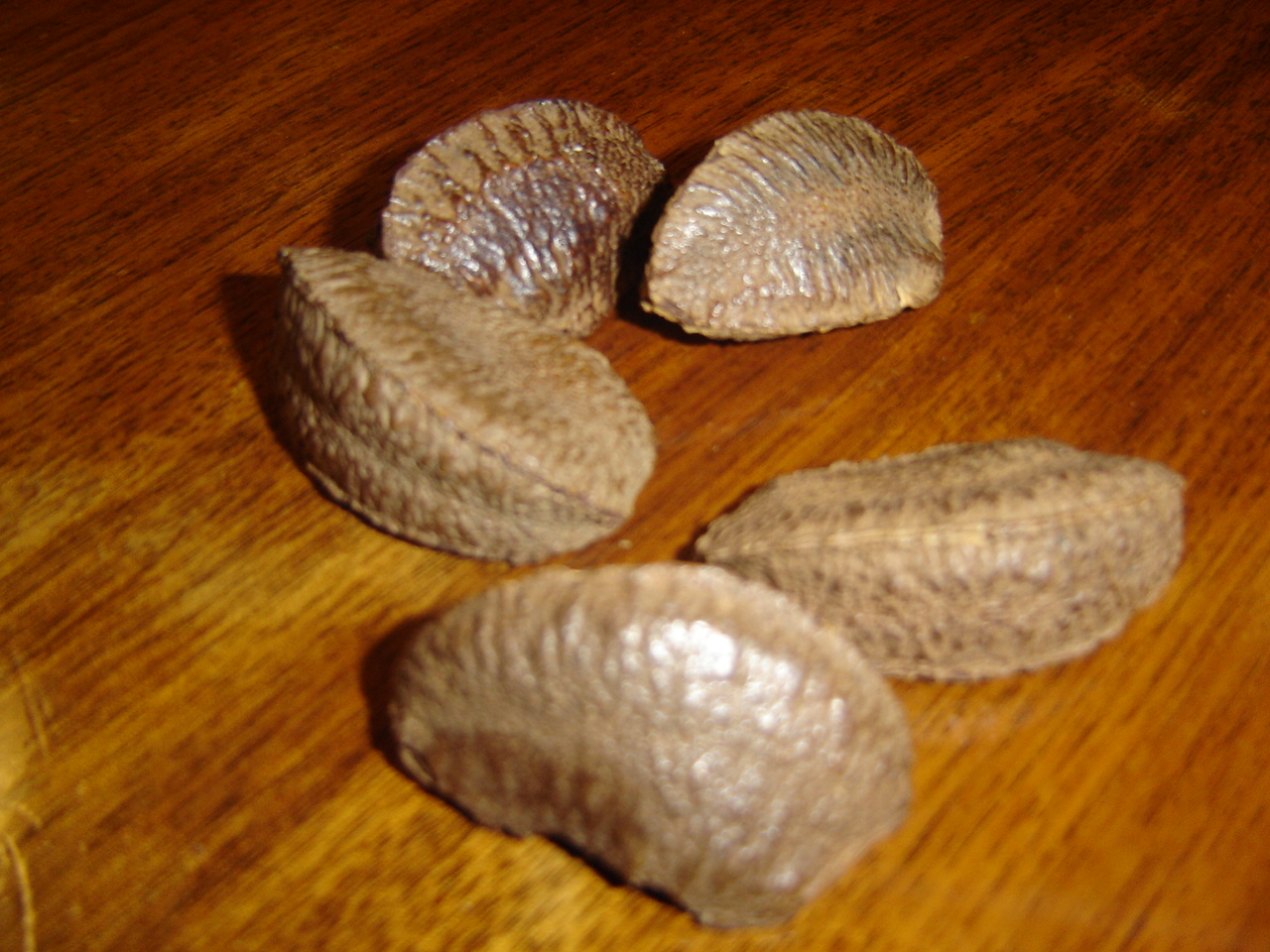
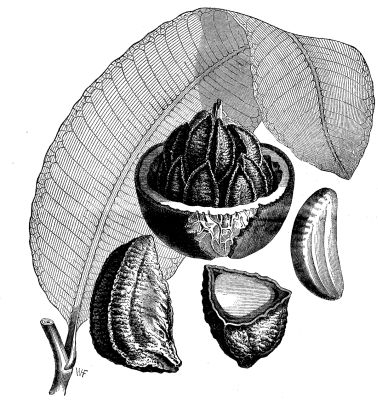
The Brazil nut tree is one of the largest in the Amazon, with a straight trunk often branchless for over half its height and a crown that emerges above the surrounding canopy. Its bark is grayish and smooth, and its leaves are dry-season deciduous. The flowers are small, greenish-white, and require large-bodied bees of genera such as Bombus and Xylocopa for pollination, which limits fruit production to pristine forests. The fruit is a large, woody capsule containing 8 to 24 wedge-shaped seeds, which agoutis gnaw open and cache, aiding seed dispersal.
Reader's Guide
The Brazil nut is significant both ecologically and economically. As a keystone species in the Amazon, its reproduction depends on specific large bees and agoutis, making it vulnerable to habitat disturbance. Commercially, the nuts are harvested from wild trees, providing income for migrant workers (castañeros or castanheiros) and serving as a model for sustainable forest use. However, intense harvesting reduces seed availability for regeneration, and logging threatens the industry. The nuts are a rich source of selenium, with one nut per day sufficient to restore selenium levels in deficient individuals. They also contain aflatoxins from fungal contamination, though sorting and drying can eliminate most. The wood is prized for carpentry and construction, but logging is prohibited in Brazil, Bolivia, and Peru. In 2024, global production was 79,736 tonnes, with Brazil and Bolivia accounting for 87%.
Did You Know?
- The Brazil nut tree can live for 500 years or more, often reaching a thousand years of age.
- The fruit weighs up to 2 kg and has a hard, woody shell 8–12 mm thick.
- Consuming just one Brazil nut per day over 8 weeks restored selenium blood levels and increased HDL cholesterol in obese women.
- In 2024, Brazil and Bolivia together produced 87% of the world's Brazil nuts.
Botanical Majesty and Reproductive Biology
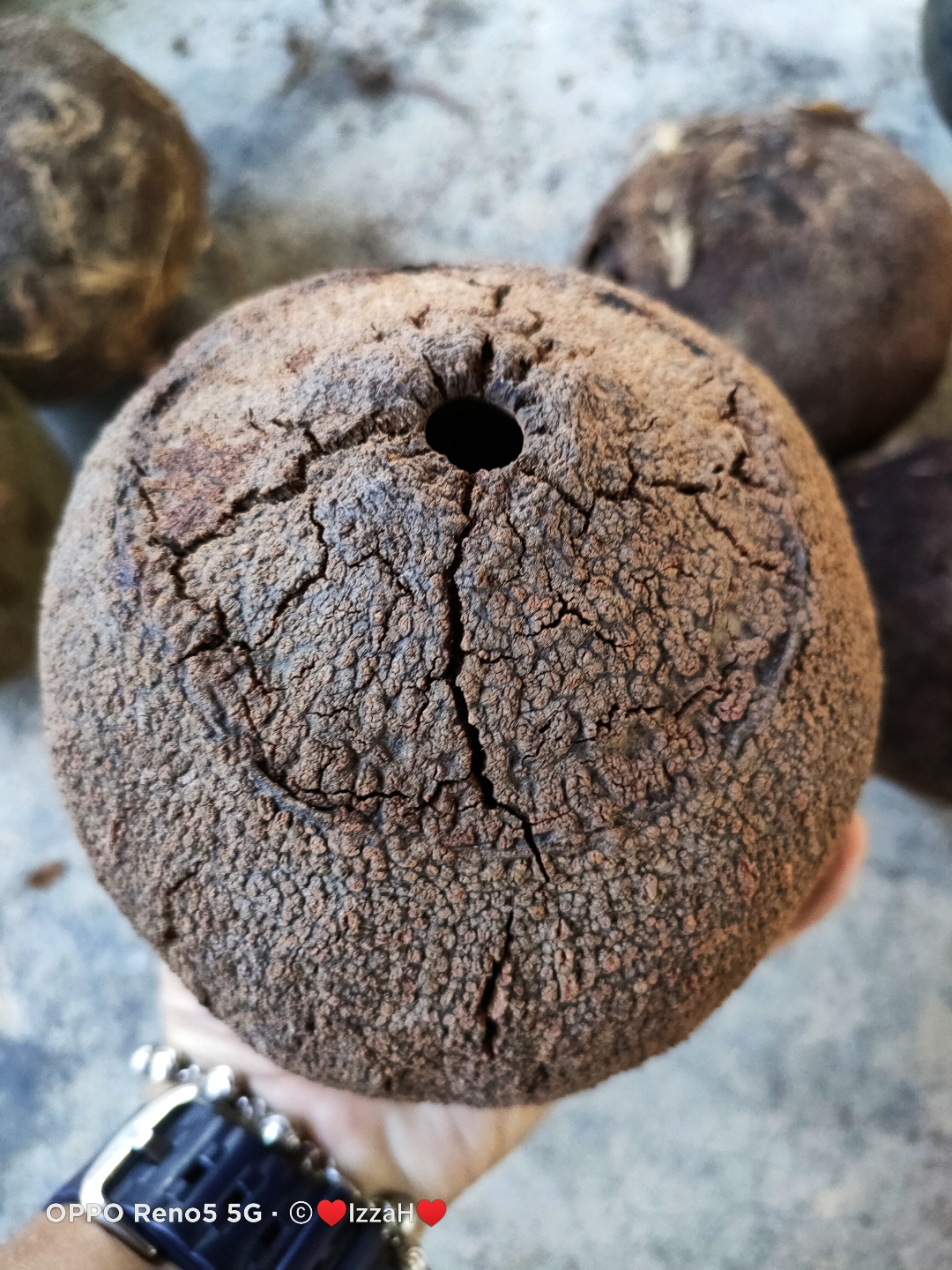
The Brazil nut tree (Bertholletia excelsa) stands as one of the Amazon's most imposing giants, soaring to 50 metres with a trunk up to 2 metres in diameter. Its straight, largely unbranched stem supports a broad emergent crown that rises well above the surrounding canopy. These trees can persist for five centuries or longer, with some specimens reaching a millennium. The bark is smooth and grayish, while the leaves—oblong, 20 to 35 centimetres long—shed during the dry season. Small greenish-white flowers cluster in panicles, each bearing six unequal cream petals and a dense hood of stamens. Reproduction is a slow, intricate process: after pollination, the fruit requires a full 14 months to mature into a woody capsule up to 2 kilograms in weight. Inside, eight to 24 wedge-shaped seeds are packed in up to three stacked whorls, resembling orange segments. A small hole at one end of the capsule allows agoutis to gnaw it open, eating some seeds and burying others, which may remain dormant for years until a canopy gap lets sunlight reach the soil.
Ecological Interdependence and the Wild Harvest
The Brazil nut's survival is inextricably tied to intact forest ecosystems. The tree produces fruit almost exclusively in pristine woodland, because only large-bodied bees from genera such as Bombus, Centris, Epicharis, Eulaema, and Xylocopa can effectively pollinate its flowers, with different genera dominating in different regions and seasons. Plantation attempts have yielded low production and remain economically unviable. Seed dispersal depends on agoutis, which gnaw open fallen capsules, consume some kernels, and cache the rest, often during the wet season. Young saplings then wait—sometimes for years in dormancy—until a neighboring tree falls and sunlight reaches the forest floor. For humans, the nuts are gathered by migrant workers called castanheiros or castañeros, and this wild-harvesting model has been championed as a way to generate forest income without felling trees. However, research on tree ages in harvested areas reveals that moderate to intense gathering removes so many seeds that regeneration lags; sites with light collection retain abundant young trees, while heavily harvested sites show almost none.
Global Production and Trade Economics
In 2024, the world produced 79,736 tonnes of Brazil nuts in their shells, with Brazil and Bolivia together accounting for 87 percent of that total. The nuts are traded in two forms: in-shell and shelled. Brazil leads as the principal exporter of in-shell product, while Bolivia and Peru dominate the shelled-kernel market, reflecting a more developed processing infrastructure in those two countries. The global export market for Brazil nuts was valued at approximately US$326 million in 2024, with Bolivia commanding the largest share at 54 percent of total export value. The tree's wood also carries commercial weight, prized in carpentry, flooring, and heavy construction, adding a secondary economic dimension to the species. Because the vast majority of nuts destined for international trade are collected from wild stands rather than plantations, the industry sits at a sensitive intersection of livelihood and conservation. Logging pressures represent a significant threat to the long-term viability of harvest operations, and the sustainability of the entire supply chain depends on maintaining the forest conditions that make wild production possible.
Taxonomy, Nomenclature, and Cultural Footprint
The Brazil nut occupies a unique taxonomic position: it is the sole species in the monotypic genus Bertholletia, named in honour of the French chemist Claude Louis Berthollet, and it belongs to the family Lecythidaceae within the order Ericales—a lineage that also includes blueberries, cranberries, tea, persimmons, and phlox. The species' common names span a wide linguistic landscape. In Portuguese-speaking regions, it goes by castanha-do-brasil, castanha-do-pará, castanha-da-amazônia, castanha-do-acre, noz amazônica, noz boliviana, and the indigenous-derived tocari and tururi. Spanish-speaking countries use castañas de Brasil, nuez de Brasil, castañas de Pará, and nuez amazónica. In North America, the nut acquired a vulgar slang nickname as early as 1896 that has since fallen out of use. The tree is native to the Guianas, Venezuela, Brazil, eastern Colombia, eastern Peru, and eastern Bolivia, where it grows as scattered individuals along the banks of the Amazon, Rio Negro, Tapajós, and Orinoco rivers.
Gallery
Frequently Asked Questions
What is the Brazil nut?
The Brazil nut is the edible seed produced by Bertholletia excelsa, a massive South American tree belonging to the Lecythidaceae family. It is the sole species in the genus Bertholletia, making it a monotypic genus native to the Amazon basin.
What are Brazil nut's key traits?
The tree can reach roughly 50 meters in height, and its fruit together with the hard shell can weigh up to 2 kilograms. The seeds are especially prized for their high selenium content, which distinguishes them from most other tree nuts.
How long does a Brazil nut tree live?
These are among the longest-lived trees in the Amazon, commonly surviving 500 years or more and sometimes reaching a full millennium. Their extraordinary lifespan makes them keystone organisms in the rainforest ecosystem.
Why is Brazil nut important?
It stands as one of the largest and most impressive trees in the Amazon, and its seeds deliver a rich natural source of selenium. In 2024, global production reached roughly 79,736 tonnes, underscoring its significant role in both local economies and nutrition.
Where does Brazil nut grow natively?
Its native range spans the Guianas, Venezuela, Brazil, eastern Colombia, eastern Peru, and eastern Bolivia. It is strictly a South American species found in the lowland rainforests of that region.
More in Fruit Trees & Berries 1-18
Spotted an error? Know more?
This is a living reference — every entry is fact-audited, and reader corrections feed straight into our audit queue. Suggest an edit · See this site's audit record